

Recovered From the Memory File
What I’m Reading
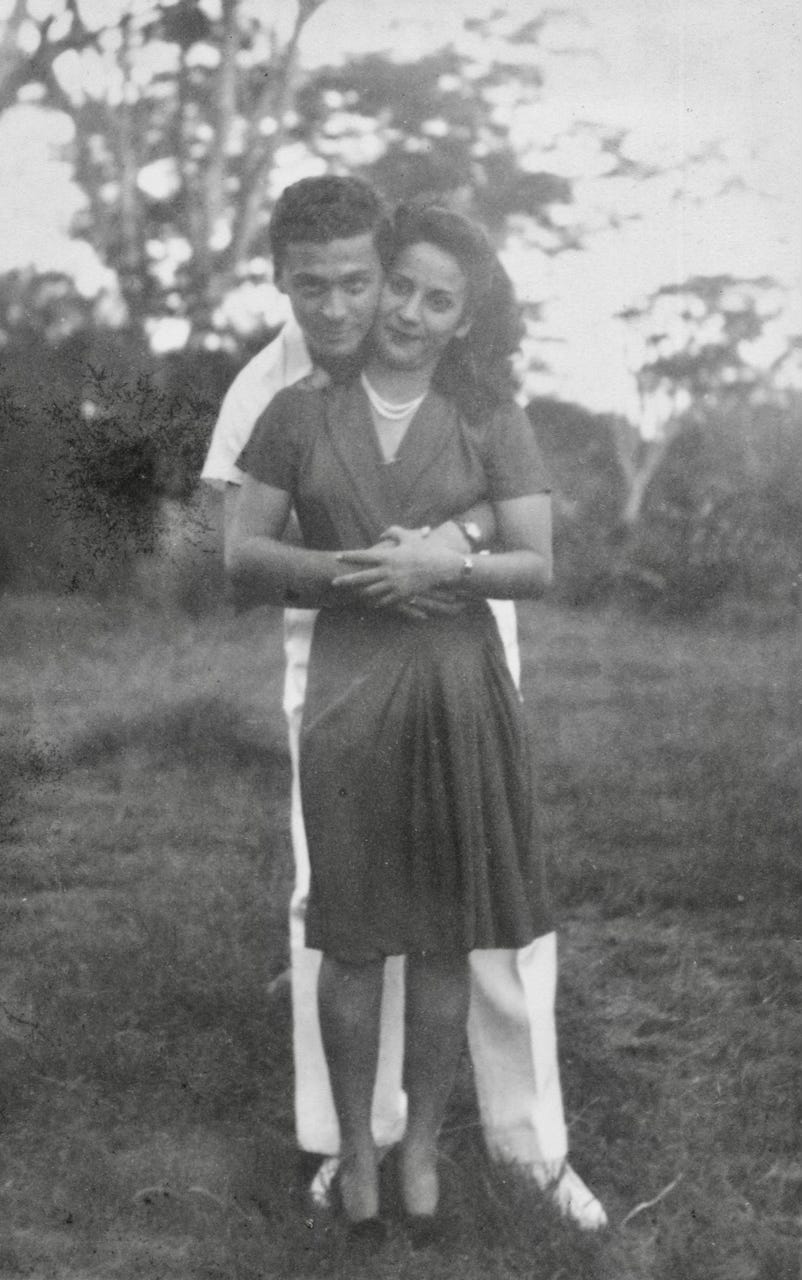
We all have moments when memory probes the recesses of where our lives have been. Most times, what is recalled is examined briefly and returned to the mental filing cabinet. But sometimes it lingers and asks for closer examination. When that happens, a memoir might be born.
Such was the case for Donna Nebenzahl, a journalist I worked with at The Montreal Gazette for many years. Over a lifetime she thought often about her family’s past and her part in it. With recall and research, she examined her exotic childhood in the South American colony of British Guiana, her Portuguese roots, what happened to her parents and where her un-Portuguese sounding name came from.
Excerpted here is the Prologue from To Linger With You: A Memoir of Sunshine and Longing. It is an enticement to join Donna on her journey of discovery. (BD)
I’ve been dreaming this story for decades, unfolding in my memory the tale of a curly-haired, brown-eyed girl living in a sun-drenched paradise overloaded with colour and adventure. In my telling, this charmed upbringing revolves around a large, boisterous family, a life of comfort and security.
But there was more to the story than that. It was too easy, too sweet. While I used pretty words to describe my tropical childhood, I carefully avoided mentioning all the missing bits, the puzzle of my early life. How I resisted, clinging to the happy-family scenario: doting grandparents and flocks of aunts and uncles. I feasted on the apparent stability of my upbringing and ignored the rest.
Isn’t it always so with children, who accept what they see, rarely questioning the current of uncertainty that might ripple beneath the surface? My brother George and I grew up thinking there was nothing strange about being raised by grandparents instead of parents, only glancingly aware that our father had died and knowing without understanding that our mother had made the choice to live in another country.
But if the circumstances were odd, tragic even, I didn’t understand that during my childhood years. We were part of a responsible, devoted family of Portuguese who had migrated generations earlier from Madeira to South America. We lived a well-ordered life. We might have been parentless, but George and I grew up with the certainty that this was our home, these were our people. We felt special.
The first clue that I was treading on shaky ground manifested in my early teens, when I was recounting to a friend the story of my father’s sudden death. I began to speak, sketching out the details as I had done over the years, when something shifted. My breath constricted in my chest, my voice tightened, and it dawned on me with a sickening shock: in that empty space I once had a father, just like everyone else did. I had a father, except he was gone. I realized it and as much as I could, being a self-centred teenager, I felt it. My father’s life had ended, and we had been left to carry on without him. I struggled to turn everything into a pretty story after that.
By the time I was a young woman, the murderous violence of Jim Jones and his disciples coloured everyone’s perception of Guyana, the country where I grew up, which during my childhood was a colony named British Guiana. The leafy paradise of my memory was looking grim, associated now with the killings and mass suicide that took place in a remote part of the country in 1978.
In university in Canada, as I learned about slavery and racism and became aware of the cultural mix that had surrounded me during my childhood, I was disturbed by niggling feelings of shame. Growing up, I never witnessed overt belligerence or disrespect toward the descendants of the many thousands of African slaves shipped to the country to work in the sugarcane fields. Indians and Chinese had also made their way to British Guiana, suffering a longer period of indenture than my Portuguese ancestors. And while the British still ran the colony when I lived there, as they had during the time of slavery, I came to realize that all the while they had been negotiating their exit strategy.
But as a child, cloistered in this beautiful place, I was blithely unaware of the role my own Madeiran great-grandparents played. They had escaped from dire poverty and many set about constructing a life of comfort that set us apart from others, those whose skin was not white. Later, I started to feel not quite like we had been consorting with the enemy, but close.
In my middle years, another revelation. Growing up Portuguese Catholic in South America, I remember only passing references to my family name, Nebenzahl. It was certainly not Portuguese but, other than the unsupported claim that my father had been Belgian, no one in my extended family spoke of my father’s story, or his ancestors. Then, after my first child was born and the birth notice appeared in the newspaper, an elderly man phoned. His last name was Nebenzahl, he said.
Was I a relative of some sort, did I have family members who came from Poland and died in the Holocaust? Not possible, I said. “I’m Portuguese Catholic. My father was born in Monte Carlo. My name is from somewhere else.” It took years before I began in earnest to investigate the name and the complex story attached to it.
The Buddhist teacher Pema Chödrön reminds us that nothing ever goes away until it has taught us what we need to know. As I rummaged around in my past, the need to contemplate and tell my story, however difficult, grew more and more pressing. So I am embarking on this path, as openly and honestly as I can manage. “The most fundamental aggression to ourselves,” Chödrön writes, “the most fundamental harm we can do ourselves, is to remain ignorant by not having the courage and the respect to look at ourselves honestly and gently.”
This girl’s life has been given so much more shape and substance than I imagined it had, recalling my early years in British Guiana. The beauty is still there, it can’t be erased, but the tale is no longer only about a lost paradise. Searching has added the layers that for years I ignored or avoided. There was no trauma or cataclysmic event that hastened the process, although the deaths of my mother and stepfather, the result of slow-moving illnesses, made the path clearer to me. “Where there is strong and steady determination to move forward, a journey will quickly gather steam,” advised my late friend Stephen Sims, a teacher and writer with deep spiritual understanding.
I have very little physical evidence of my life in South America. Photographs, family stories and odd bits of memorabilia have played a big part in stitching together the myriad pieces. What I do have is memory of the sights and sounds, the textures of that place that I once called home.
The cloth is still not whole, though it is more intricately worked now with the unveiling of a different family saga. The story of my last name, Nebenzahl, unfolded not in the sunny tropics but amidst the glitter of Monte Carlo and the desperate wartime streets of Paris and Marseille. I never knew this cast of characters and, except for my father, they were never to know that they made me. Here I take a few tentative steps to carve out for my ancestors, as Carl Jung suggested, answers to the questions that their lives have left behind.
To Linger With You
A Memoir of Sunshine and Longing
By Donna Nebenzahl
Stonehewer Books, 236 pages
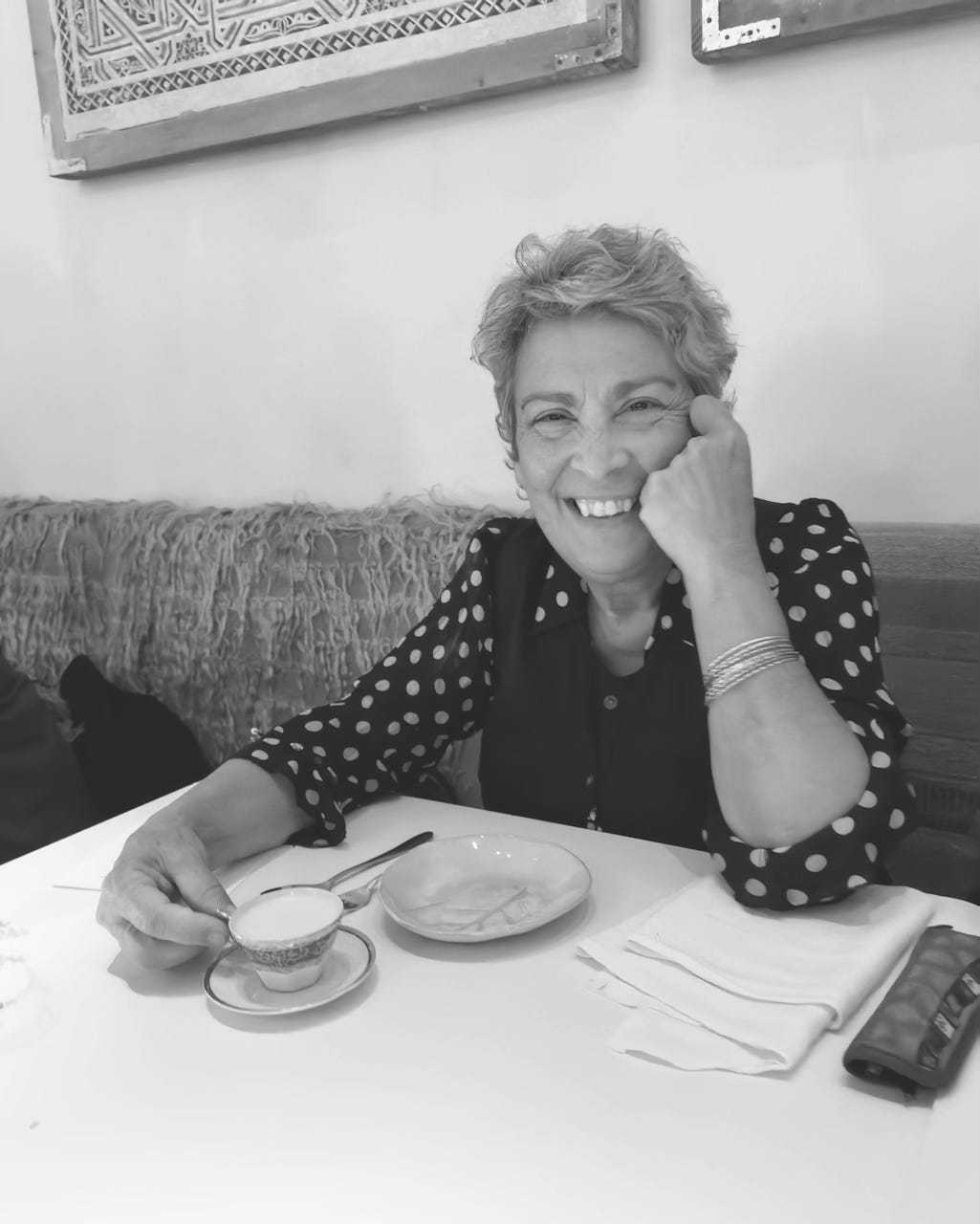
Donna will be part of a panel on Memoir Writing at the Blue Metropolis International Literary Festival on Sunday, April 26 at 11:30 a.m. at HOTEL 10 — Salle Jardin. Tickets $8.
She will also present her book in conversation with author Elaine Kalman Naves at the Westmount Library on May 7 at 7 p.m. Books will be available for sale.
Thank you, Bryan, for sharing your audience with me. Memories — like our many years as colleagues during those heady, wonderful Gazette years — are worth the journey, are they not?
The drive from Flin Flon to anywhere is too far!