

Learning To Be a Guest
How an archaeologist turned writer

A new contributor, Jennifer DeLeskie, joins Life Sentences today. She explains how archaeology led her to write a future-focussed novel set in Canada’s Arctic.
On a sunlit night in July 1992, I sat on a cliff overlooking the Arctic Ocean with my new friends, Olleetua and Jamesie, listening to a herd of walruses on the beach below grunting and moaning. We couldn’t see them from our vantage point, but I could imagine them jostling their enormous bodies into place among all the others, seeking a comfortable spot to lock in for the night.
I’d been on Baffin Island for about a month by then, part of a team of archaeologists studying European contact with the Dorset and Thule of Outer Frobisher Bay, far from Iqaluit or any permanent human settlement.
The first few weeks had been disorienting. My eyes kept searching for buildings, highways, evidence of human alteration; sometimes even inserting them into the landscape—an iceberg becoming a ship, a crack in a far-off ridge becoming a road. I was trying to make the unfamiliar familiar.
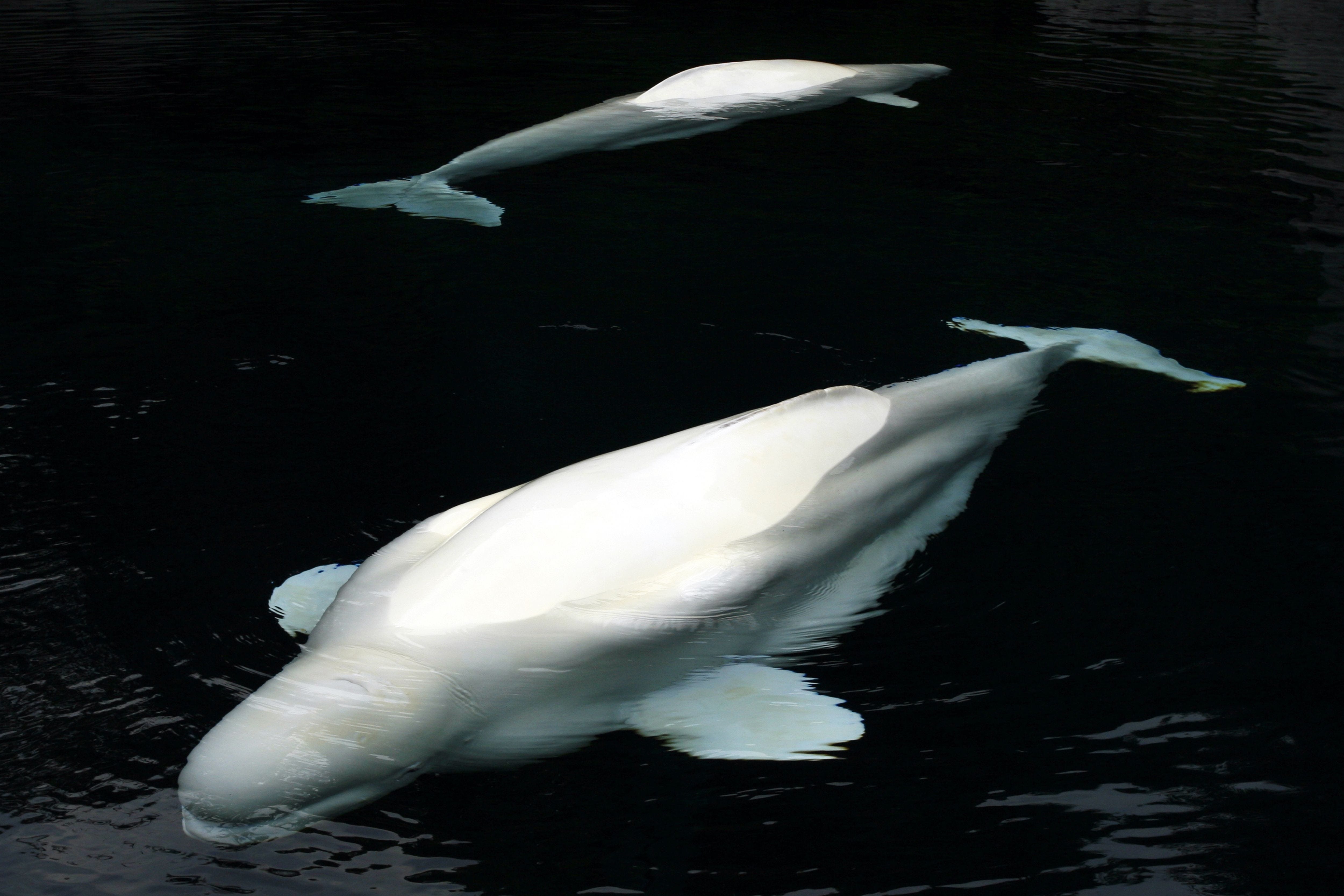
I was probably doing so then, staring out at the horizon, looking for a contrail, when Olleetua tapped my elbow and pointed down. A pod of belugas had gathered near shore, adults and calves breaching the almost tropical blue water playfully, as if they too were amused by the noises the walruses made.
When I returned to my tent that night—a Eureka one-man kitted out with a leaky inflatable mattress and the warmest sleeping bag commercially available in 1992—the back of my jacket was covered in clothespins.
Olleetua and Jamesie pranked me like this most days, silently sneaking up from behind while I was bent over my excavation unit inside a semi-subterranean sod house. By day’s end, I’d often have twenty or thirty clothespins attached to me. They’d almost certainly added a few more up on that cliff while I watched the belugas.
Their ease and fluency in that place stayed with me. They made me feel welcome while reminding me that I was a guest—by turning me into a human hedgehog.
And yet there I was, digging up traces of a past that wasn’t mine, literally weighing and measuring it. How much could I really have to say about their ancestors’ relationship with European whalers in the late 19th century? And for whom would this information be relevant? When I excavated an almost perfectly intact harmonica one day, I remembered the old woman at the Legion hall in Iqaluit who had told me that her ancestors liked the whalers because they brought good things to trade. She hadn’t needed to dig anything up to know this.
That sense of unease followed me throughout my short career in archaeology, eventually ending it. I did fieldwork in France and Belize, and spent two seasons at the Hunter’s Point site on Ontario’s Saugeen Peninsula, where once again I was offered hospitality by people whose relationship to the land ran deeper than mine. Mia and Vanessa, young crewmates, invited me onto Chippewas of Nawash Unceded First Nation (Neyaashiinigmiing)—Cape Croker, then—to dances in the high school gym where the entire community would turn up—grandmothers and toddlers and teenagers doin’ the Humpty Hump and slow dancing to Whitney Houston. We’d drive around the rez in Vanessa’s truck and talk to boys, and I was usually reminded in various ways—often jokingly, always kindly—that I wasn’t from around there.
I didn’t have language for my discomfort with the work I was doing until years later, when I read Robin Wall Kimmerer’s Braiding Sweetgrass. Kimmerer, a botanist and member of the Citizen Potawatomi Nation, writes about forms of knowing rooted in relationship—to land, to community, to lived experience. Her writing gave me a way to understand something I had felt but never been able to articulate: that knowledge extracted from a place is not the same as knowledge formed in relationship with it.
I’d gotten into archaeology because I wanted to feel more at home in the world. I wanted a sense of continuity with the past and with the land beneath my feet. But I gradually realized that archaeology couldn’t give me the kind of knowledge I was seeking. I could spend four months on Baffin Island dropping test pits and working the stadia rod, or a summer weighing rocks on the Saugeen Peninsula (let nobody tell you that archaeology isn’t glamorous), but I couldn’t excavate my way into belonging.
Both Olleetua and Jamesie died tragically not long after that field season, drowning in separate boating accidents. They were young, handsome, funny, and alive. I had crushes on both of them.
After a detour into law, I found my way to writing. I thought I’d left those questions—about belonging and ways of knowing—behind, only to discover they were still there, just in a different form. What stories can I tell truthfully? Whose stories?
With Everclear, my debut novel, I don’t answer those questions so much as place a character inside them. Its sixteen-year-old protagonist, Kai Mendelsohn, arrives in Eeyou Istchee, land of the James Bay Cree, one hundred years in the future, looking for answers. Like me, she arrives looking for the wrong things.
She has to learn that understanding begins not with answers but with attention and—crucially—with relationships, and that some forms of knowledge can’t be excavated, measured, or possessed.
By the end of the book, Kai Mendelsohn is beginning to understand what it means to be a good guest.
And she gets to see belugas.
Everclear is dedicated to the memory of Olleetua and Jamesie. It will be released on August 25, by Flame Arrow Publishing.
 | A guest post by
|